-
Website: LinkedIn
The RAAC Crisis: A Structural Timebomb
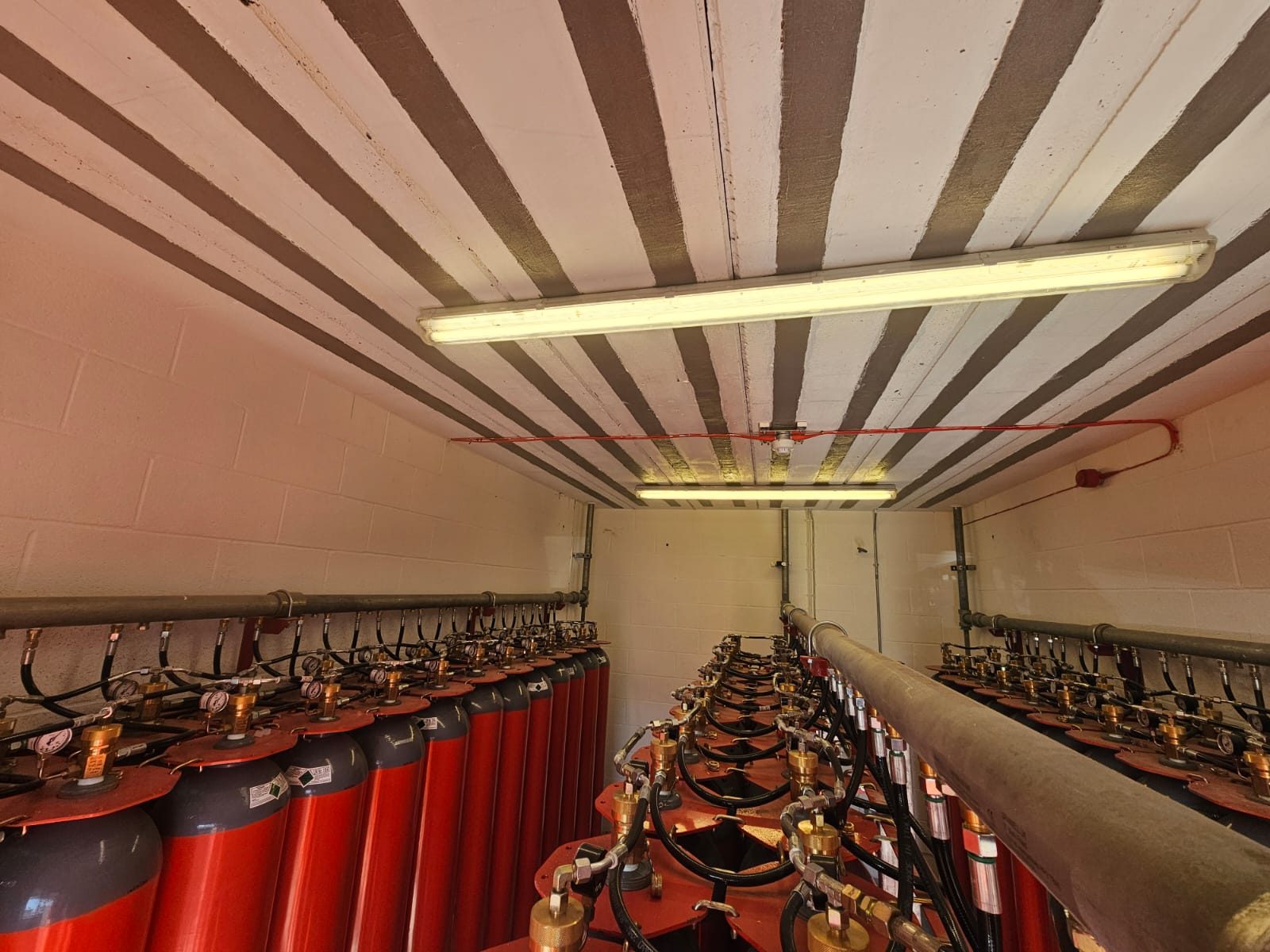
Reinforced Autoclaved Aerated Concrete (RAAC) was once praised for being lightweight and thermally efficient. However, decades after installation, these planks are now failing across the UK infrastructure. The “bubbly” texture of RAAC is highly porous, allowing moisture to reach the internal steel reinforcement with ease. Because RAAC lacks the density of traditional concrete, once that steel begins to corrode, the planks lose their shear strength and can collapse without any visible warning.
Why Traditional “Steel and Timber” Fixes Fall Short
The standard response to RAAC is to install heavy secondary steel propping or bulky timber frameworks beneath the planks. While this provides a safety net, it is often a “clunky” solution. It significantly reduces head height, adds massive dead-weight to the building and often requires the facility to be closed for weeks.
In hospitals, schools and commercial offices, you cannot always afford the loss of space or the long-term disruption of heavy site works. To save the building without sacrificing its utility, you need a solution that adds immense strength without adding bulk.

Engineering the Future: CFRP and Composite Reinforcement
Structural Repairs bridges the gap between traditional civil engineering and aerospace-grade material science. We specialise in the use of Advanced Composites, specifically Carbon Fibre Reinforced Polymers (CFRP), to remediate and strengthen RAAC planks in situ.
By bonding carbon fibre to the underside of a RAAC plank, we create a new, high-tensile “skin” that takes the load that the corroded internal steel can no longer handle.
- CFRP Laminate Strengthening: We apply ultra-thin, high-modulus carbon fibre plates to the tension face of the RAAC planks. These laminates are ten times stronger than steel but only millimetres thick, meaning we restore structural safety with zero loss of head height.
- Near-Surface Mounted (NSM) Reinforcement: For planks requiring extreme shear reinforcement, we cut narrow slots into the RAAC and embed carbon fibre rods in structural epoxy. This “hidden” engineering restores the integrity of the plank from within its own profile.
- Forensic RAAC Surveys: We do not guess. We conduct high-level structural audits using boroscopes and ultrasonic testing to determine the exact state of the internal reinforcement before designing a bespoke composite solution.
- Lightweight and Non-Invasive: Because composites are so light, they can be installed using manual handling techniques. This eliminates the need for heavy lifting gear or massive structural propping, allowing us to work in sensitive environments like active wards or classrooms.
RAAC and Composites Technical FAQ
Yes. When correctly engineered, a CFRP system becomes the primary load-bearing element. It acts as an external reinforcement that bridges any internal failures in the RAAC. Even if the internal steel has completely corroded, the carbon fibre provides the necessary tensile strength to keep the plank structurally sound and safe.
It is significantly faster. Because we are not welding or bolting heavy steel sections, a composite repair can often be completed in a fraction of the time. There is no heavy machinery required and the materials cure rapidly, allowing the room to be returned to service much sooner.
Yes. Carbon fibre does not rust, rot or degrade over time. It is completely immune to the moisture issues that destroy RAAC in the first place. Once bonded with our high-performance structural epoxies, the repair becomes a permanent part of the building’s fabric.
Because the process is relatively quiet, clean and uses compact equipment, we can often work in occupied buildings with minimal disruption. We phase our works to ensure that only small areas are cordoned off at any one time, unlike traditional methods that often require total floor closures.