-
Website: LinkedIn
Stop Subsidence at the Source. Stabilise the Foundation.
Structural Injection and Concrete Underpinning : A building is only as viable as the ground it stands on and the monolithic continuity of its foundations. When soil conditions change, voids form, or load-bearing concrete cracks, the entire structural geometry of the asset is compromised. Sinking foundations, stepped masonry cracking, and expanding structural fissures are critical warning signs that the building’s fundamental support system is failing.
The Threat of Progressive Structural Failure
Ignoring foundation movement or deep structural cracking guarantees exponential damage. As subsidence progresses, the transfer of loads becomes uneven, stressing structural nodes that were never designed to carry those forces. This leads to severe internal deflection, compromised waterproofing, and eventually, partial or total structural condemnation.
Traditional mass-concrete underpinning or crude crack-filling often exacerbates the problem. Simply pouring more concrete into the ground without precise geotechnical data adds unnecessary dead weight, which can trigger further settlement. Likewise, injecting a superficial filler into a structural crack does nothing to restore the tensile strength of the concrete matrix, leaving the asset highly vulnerable to dynamic loads and water ingress.
Engineered Ground and Resin Solutions
Structural Repairs treats foundation failure and structural cracking as precision engineering challenges. We utilize comprehensive geotechnical data and material science to design interventions that permanently stabilise the asset with minimal disruption to the surrounding environment.
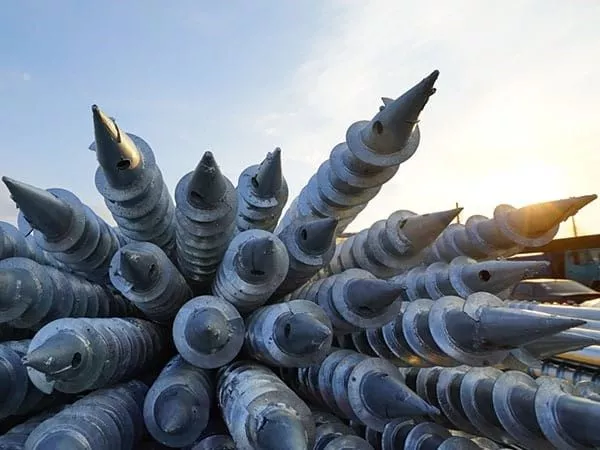
- Advanced Underpinning: We do not rely solely on traditional, highly invasive excavation. Depending on the exact soil pathology and load requirements, our engineers specify bespoke underpinning strategies, including the installation of micro-piles, screw piles, and targeted ground stabilization to bypass weak soil strata and transfer the building’s weight to solid bedrock.
- Structural Resin Injection: To restore the monolithic integrity of cracked concrete, we deploy high-pressure structural injection systems. Using ultra-low viscosity structural epoxies, we inject the resin deep into the concrete matrix. This highly engineered composite cures to be significantly stronger than the original concrete, permanently fusing the structure back together and reinstating its original load-bearing capacity.
- Chemical Grouting & Void Filling: For subsurface voids caused by water washout or soil compaction, we inject expanding polyurethane (PU) structural resins. These rapidly expand to fill the void, consolidate the loose soil, and re-level sunken concrete slabs with millimetre precision.
Injection & Underpinning Technical FAQ
Epoxy resin is a high-strength structural adhesive used to permanently bond cracked concrete back together, restoring its original tensile and compressive strength. Polyurethane (PU) is a flexible, rapidly expanding resin used primarily to stop high-volume water leaks, fill subsurface voids, and consolidate loose ground beneath foundations.
The most common indicators of subsidence and foundation failure include deep, diagonal “stepped” cracks in masonry walls (especially around doors and windows), doors that suddenly bind or fail to close, noticeably sloping floors, and visible gaps appearing between the skirting boards and the floor slab.
Yes, provided the root cause of the movement has been resolved. Structural epoxies possess a tensile strength that far exceeds that of the host concrete. Once fully cured, the injected crack becomes the strongest part of the structure, effectively “welding” the concrete back into a single, monolithic element.
Modern underpinning has evolved significantly. While traditional mass-concrete underpinning requires extensive excavation, we frequently utilize modern micro-piling and chemical grouting techniques. These methods require vastly smaller equipment, significantly reduce the volume of excavated spoil, and can often be executed in confined spaces or live environments with minimal vibration or noise.